
Email Anytime
explorevietnamwithkylee@gmail.com
Call Anytime
Email Anytime
Call Anytime

admint
June 16, 2026
6 mins read
When travelers think of Vietnam, they often picture the limestone islands of Ha Long Bay, the lantern-lit streets of Hoi An, or the bustling energy of Ho Chi Minh City.
Yet, hidden away in the country’s mountainous interior lies one of Vietnam’s most authentic and underrated regions — the Central Highlands.
Over the years, I have guided visitors across this remarkable landscape, and almost every journey begins with the same reaction:
“I had no idea Vietnam looked like this.”
Rolling coffee plantations stretch toward the horizon. Waterfalls thunder through ancient forests. Traditional longhouses preserve centuries-old customs, while cool mountain air offers a refreshing escape from Vietnam’s tropical coastline.
For travelers seeking a deeper connection with the country’s natural beauty and cultural diversity, Vietnam’s Central Highlands delivers an experience unlike anywhere else.
Known locally as Tây Nguyên, Vietnam’s Central Highlands consist of five provinces:
The region sits on a vast plateau rising between 500 and 1,500 meters above sea level, creating a cooler climate and fertile volcanic soil that support some of Vietnam’s most important agricultural products.
Today, the Central Highlands are internationally recognized as the heart of Vietnam’s coffee industry, producing a significant portion of the world’s Robusta coffee beans.
However, coffee tells only part of the story.
For coffee lovers, a visit to Buon Ma Thuot, the capital of Dak Lak Province, is almost a pilgrimage.
Vietnam is one of the world’s largest coffee exporters, and much of that production originates in the Central Highlands.
Walking through coffee farms during harvest season offers a fascinating perspective on the journey from bean to cup.
I’ve often watched visitors gain a newfound appreciation for their morning coffee after meeting local farmers who have cultivated these lands for generations.
One of the most enriching aspects of traveling through the Central Highlands is the opportunity to connect with Vietnam’s ethnic minority communities.
The region is home to diverse groups such as the Ede, M’Nong, Jarai, and Ba Na peoples, each with distinct traditions, languages, and architectural styles.
Traditional communal houses stand proudly at the center of villages, while oral storytelling, weaving, and gong performances continue to play an important role in preserving cultural identity.
In fact, the Space of Gong Culture in the Central Highlands of Vietnam has been recognized by UNESCO as an Intangible Cultural Heritage of Humanity.
Witnessing a gong performance beneath the stars remains one of the most memorable experiences I have shared with travelers.
The rhythmic sound resonates through the mountains in a way that feels timeless.
The Central Highlands boast some of Vietnam’s most spectacular waterfalls.
Unlike the heavily visited attractions found elsewhere, many of these natural wonders remain relatively peaceful and uncrowded.
Among the most impressive are:
Often referred to as the “Wife Waterfall,” Dray Nur plunges dramatically through volcanic rock formations, creating a powerful curtain of water.
Known as the “Husband Waterfall,” Dray Sap is equally breathtaking and surrounded by lush forest trails.
Located near Da Lat, Pongour Waterfall cascades gracefully across multiple tiers, making it one of the most photogenic waterfalls in Vietnam.
Visit during the rainy season, from May to October, when the waterfalls are at their most powerful and impressive.
No journey through the Central Highlands would be complete without spending time in Da Lat.
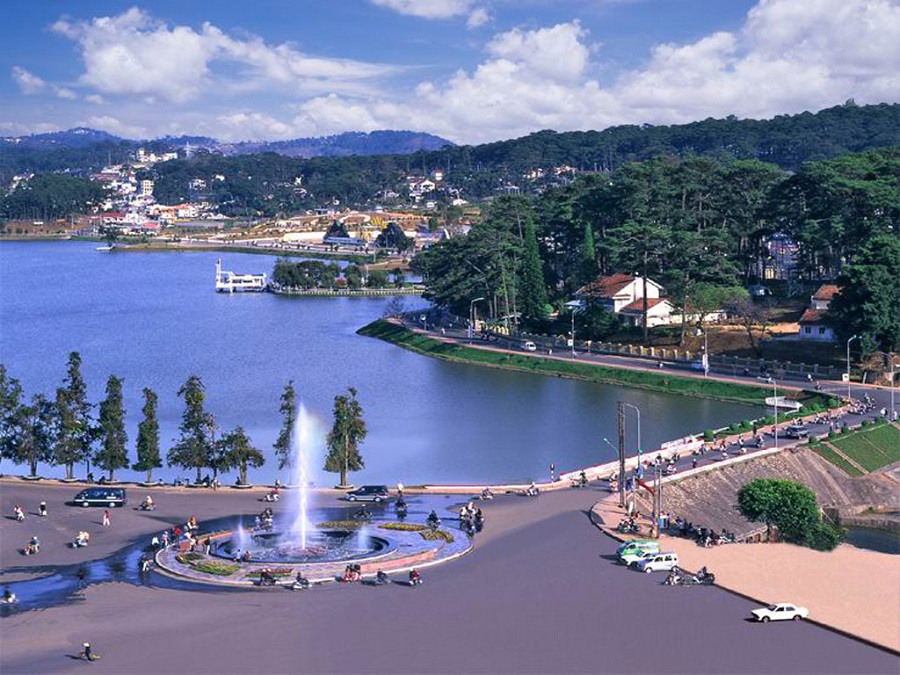
Nicknamed the “City of Eternal Spring,” Da Lat enjoys a mild climate year-round, making it a favorite destination for both domestic and international travelers.
French colonial villas, pine-covered hills, colorful flower gardens, and serene lakes create an atmosphere unlike anywhere else in Vietnam.
Beyond its romantic reputation, Da Lat also offers excellent opportunities for outdoor adventure.
Popular activities include:
The city’s relaxed pace often surprises visitors accustomed to Vietnam’s larger urban centers.
Food in the Central Highlands reflects the region’s agricultural abundance and indigenous heritage.
While cuisine varies from province to province, several local specialties deserve attention.
Some dishes worth trying include:
These meals are often simple yet deeply connected to local traditions and seasonal ingredients.
The Central Highlands offer something increasingly rare in modern travel: authenticity.
This is a region where daily life unfolds at a gentler pace.
Where travelers can witness ancient traditions still practiced today.
Where landscapes remain largely untouched by mass tourism.
After many years guiding visitors throughout Vietnam, I have found that those who venture into the highlands often leave with some of their strongest memories.
Not because of famous landmarks.
But because of meaningful encounters.
A conversation with a coffee farmer.
The echo of bronze gongs beneath the night sky.
The cool mountain breeze drifting across endless pine forests.
These are the experiences that stay with you long after the journey ends.
Vietnam’s Central Highlands may not always appear on first-time travel itineraries, but perhaps that is precisely what makes them so special.
They reward curiosity.
They invite exploration.
And they reveal a side of Vietnam that many travelers never have the chance to discover.
If you are searching for a destination that combines breathtaking scenery, rich cultural heritage, exceptional coffee, and genuine local experiences, the Central Highlands deserve your attention.
Sometimes, the most unforgettable journeys begin by venturing beyond the obvious.
And in Vietnam, few places embody that spirit better than the Central Highlands.
June 16, 2026
Our Blog 1001
June 16, 2026
Our Blog 1001
May 10, 2026
Our Blog 1001
April 30, 2026
Our Blog 1001