
Email Anytime
explorevietnamwithkylee@gmail.com
Call Anytime
Email Anytime
Call Anytime

admint
June 16, 2026
5 mins read
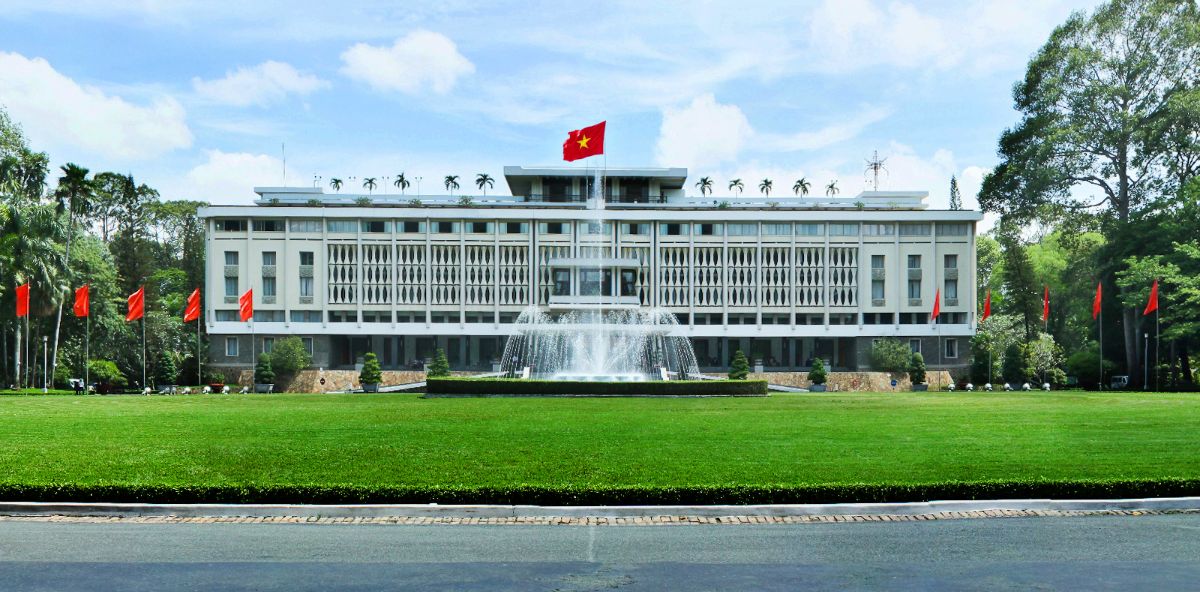
If there is one place in Ho Chi Minh City where Vietnam’s modern history truly comes alive, it is the Independence Palace.
After years of guiding travelers through Saigon, I have noticed that many visitors arrive expecting a simple government building or a quick photo stop. Yet, once they step inside, they often spend far longer than planned, captivated by the stories hidden behind every corridor, conference room, and underground bunker.
The Independence Palace is not merely an architectural landmark. It is a symbol of resilience, political transformation, and one of the most significant moments in Vietnamese history.
Located in the heart of District 1, the Independence Palace served as the residence and workplace of the President of South Vietnam during the Vietnam War.
The building gained worldwide recognition on April 30, 1975, when North Vietnamese tanks broke through its gates, marking the end of the war and the reunification of Vietnam.
For many Vietnamese people, the palace represents an important chapter in the country’s journey toward peace and independence.
For travelers, it offers a rare opportunity to walk through history rather than simply read about it.
One of the reasons I enjoy bringing guests here is that the palace remains remarkably well-preserved.
Unlike museums where artifacts sit behind glass displays, the Independence Palace allows visitors to step directly into the spaces where major decisions once shaped the nation’s future.
As you wander through the grand reception halls, elegant meeting rooms, and presidential living quarters, it feels as though time has stood still.
The original furniture, communication equipment, and interior design from the 1960s remain largely intact.
The atmosphere is both fascinating and unexpectedly nostalgic.
These impressive halls hosted diplomats, political leaders, and official ceremonies.
The combination of modernist architecture and traditional Vietnamese elements reflects the aspirations of a young nation during a period of immense change.
Hidden beneath the palace lies one of its most intriguing features.
The underground bunker served as the operational headquarters during wartime. Narrow corridors connect communication rooms filled with old radios, military maps, and strategic equipment.
Many visitors tell me this section leaves the strongest impression.
It offers an intimate glimpse into the realities of leadership during conflict.
The rooftop helipad stands as a reminder of the dramatic events surrounding the final days of the Vietnam War.
It also provides a unique perspective overlooking modern Ho Chi Minh City, where gleaming skyscrapers now rise beyond the palace grounds.
No visit is complete without seeing the palace’s iconic entrance.
These gates became internationally recognized after images of tanks entering the compound on April 30, 1975, were broadcast around the world.
Standing here today, surrounded by peaceful gardens and curious travelers, it’s difficult to imagine the intensity of that historic moment.
After guiding hundreds of visitors through this attraction, here are a few recommendations:
What I appreciate most about the Independence Palace is its ability to tell multiple stories at once.
For history enthusiasts, it offers valuable insight into Vietnam’s recent past.
For architecture lovers, it showcases an elegant blend of modernist design and Vietnamese identity.
For younger generations, it serves as a reminder of how far the country has come.
Every visitor experiences this place differently.
Some are moved by the historical significance.
Others are fascinated by the preserved interiors or the hidden bunker below ground.
But almost everyone leaves with a deeper understanding of Vietnam beyond the bustling streets and vibrant food scene that define modern Saigon.
Ho Chi Minh City is often celebrated for its energy, street food culture, and dynamic pace of life.
Yet beneath the city’s modern façade lies a rich and complex history waiting to be explored.
The Independence Palace stands as one of the best places to begin that journey.
As a guide who has shared this site with travelers from around the world, I can confidently say that it is more than just another tourist attraction.
It is a place where history feels tangible.
A place where stories become real.
And perhaps one of the most meaningful experiences you can have while visiting Saigon.
If the walls of the Independence Palace could speak, they would tell tales of uncertainty, courage, and ultimately, hope.
Fortunately for us, all we need to do is walk through its doors and listen.
June 16, 2026
Our Blog 1001
June 16, 2026
Our Blog 1001
May 10, 2026
Our Blog 1001
April 30, 2026
Our Blog 1001